ACLART / 15022
Classif. R&D · open
Domain Biomechanics · ML
Period 2025 → 2028
Fund COMPETE2023-FEDER-00867200
PI J. A. Simões
Status ● In progress
Artificial intelligence-driven in silico simulation for prediction of anterior cruciate ligament reconstruction clinical outcomes
INESC TEC > UA

Teaching a knee
to predict
its own future.

A predictive model coupling clinical-surgery data with finite-element biomechanics — built to tell a surgeon, before surgery, how a given patient's reconstruction is likely to perform.
Dataset
1,000+
ACLR records · PT / SE / NO / DK
Researchers
13
3 research teams
0
5
10
15
20
25
30
35
§ 01 / 07
00
Abstract
A predictive model for ACLR — informed by biomechanics, not hope.

ACLART intersects anterior cruciate ligament reconstruction (ACLR) with AI machine learning and in silico simulation. Individual patient clinical & surgery data are fed into ML algorithms and coupled with finite-element computational simulation.

The output is a per-patient prediction of surgical outcome, measured across validated instruments: KOOS, TALS, LKSS, and IKDC-SKF — used both to improve patient selection and to stratify revision-surgery probability.

Deliverable: a point-of-care clinical calculator for ACLR, externally validated on independent datasets, disseminated through peer-reviewed publication and a national SPOT seminar.
ACL reconstructionmachine learningfinite elementKOOS · TALS · LKSS · IKDCin silicorevision probability
§ ANNEX
05
Imaging
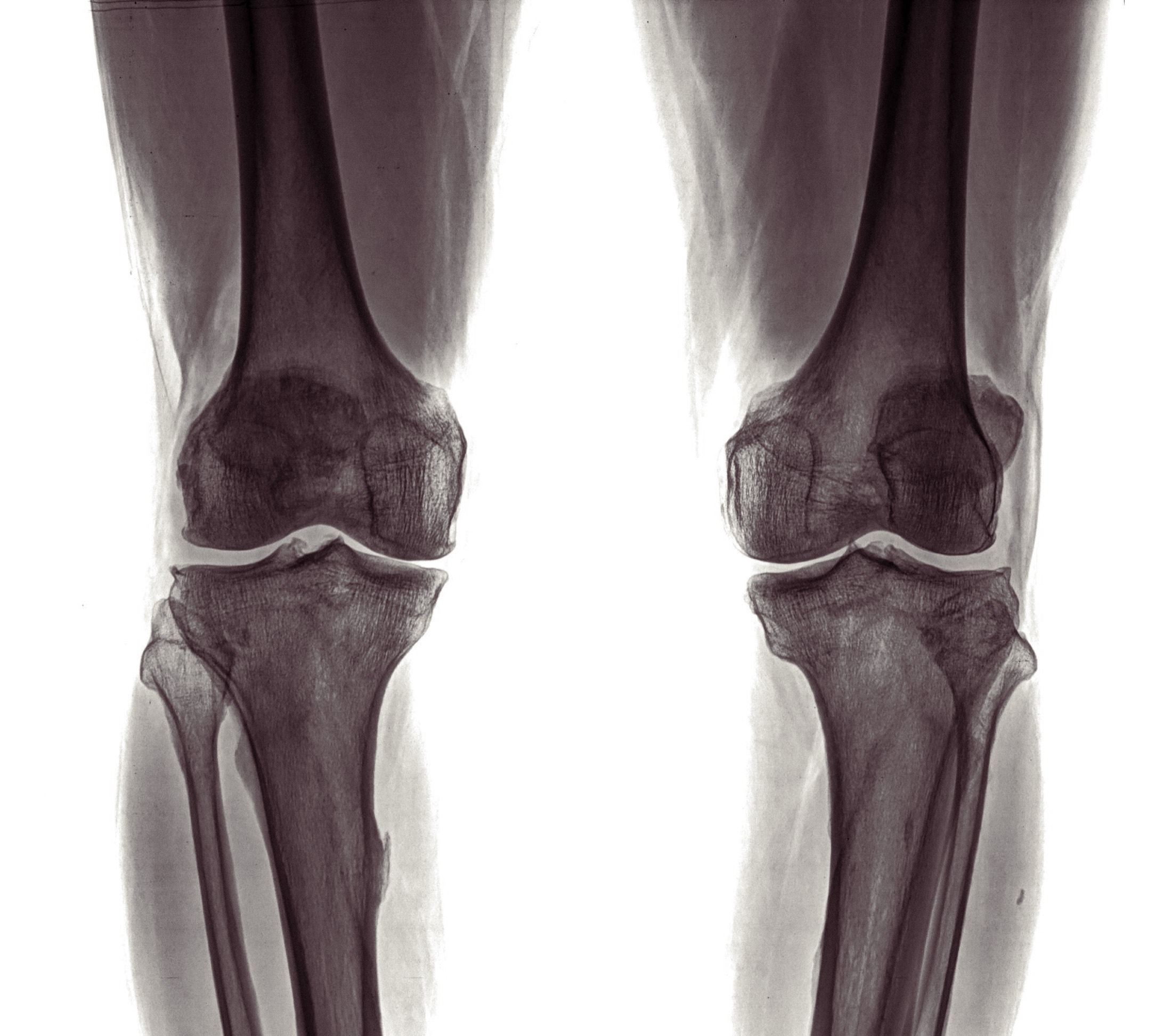
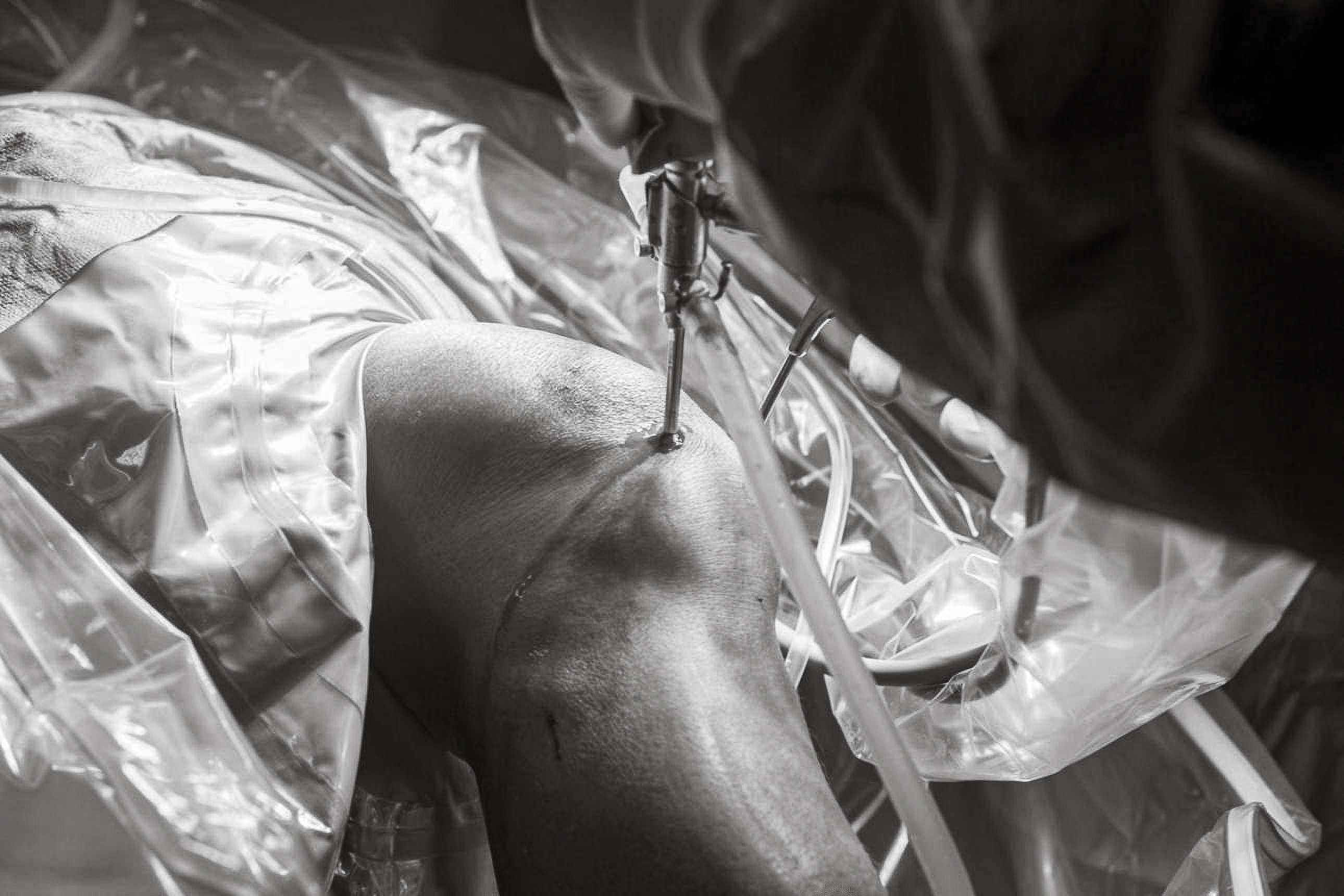
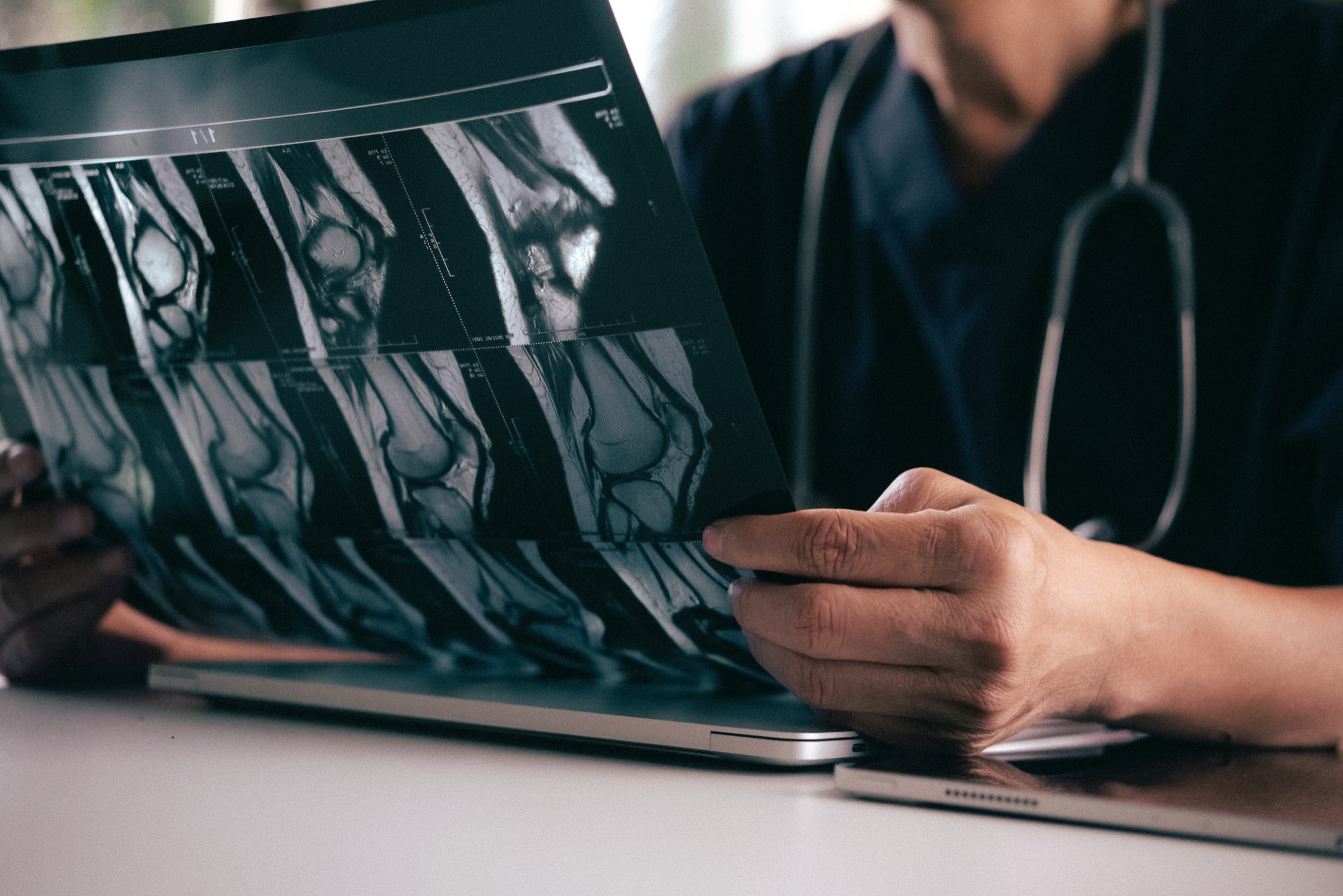
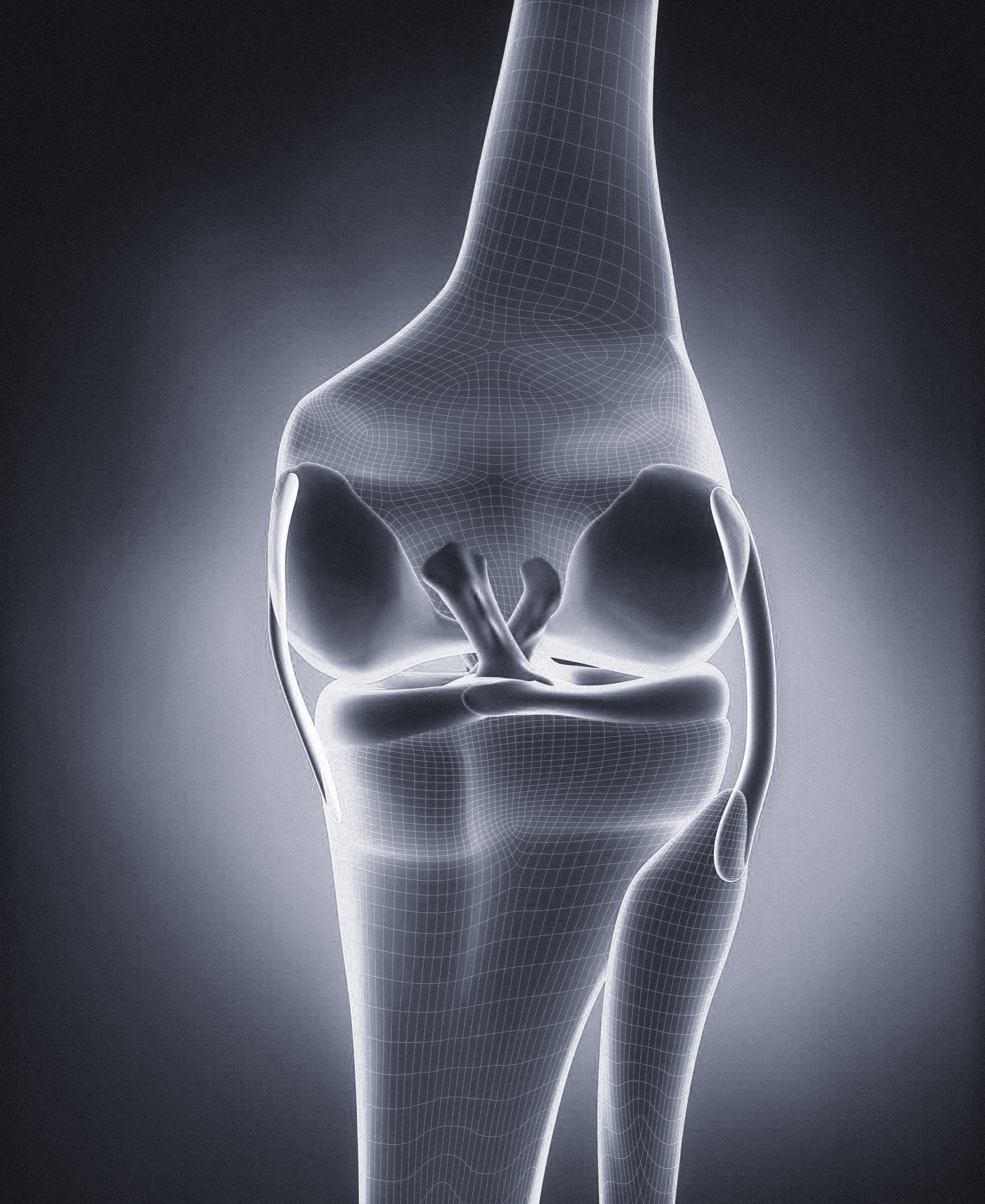
Five frames of one problem — imaging, model, and the surgery they serve.
Stylised 3D wireframe render of the knee joint and cruciate ligaments
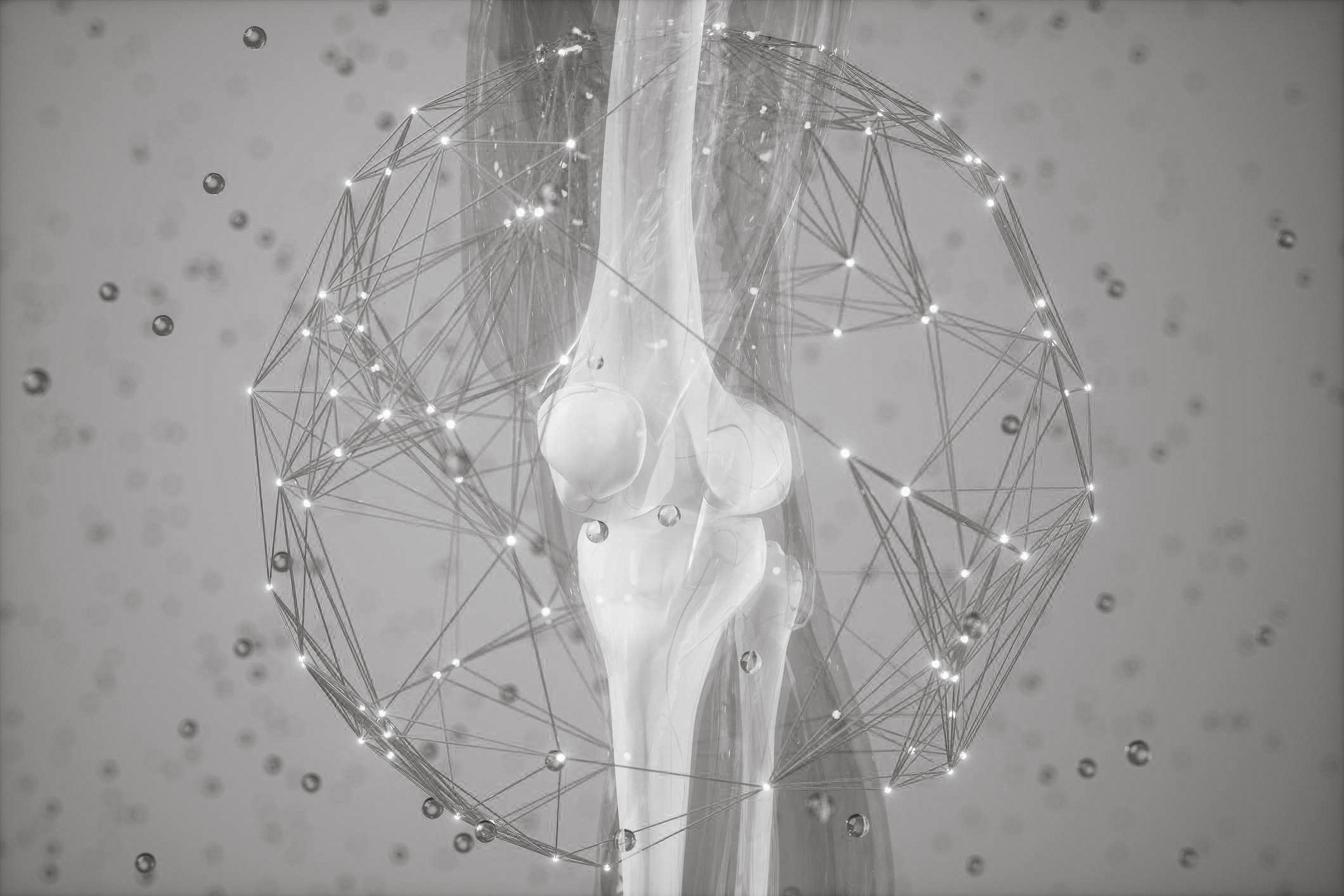
Knee joint rendered inside a generated point-mesh network
Frontal radiograph of both knees
ACL reconstruction surgery in progress
Clinician examining MRI knee imaging films
01 / 05
PL. 01 Cruciate ligaments — the structure ACLART reconstructs and predicts.
§ 02 / 07
06
Objectives
Six targets, arranged as a matrix.
A · Patient
B · Practice
C · Research
01
A·01
i.

Patient outcomes & long-term prognosis

Subjective failure risk at patient-specific level during pre-op discussion.

B·01
ii.

Refined technique & rehabilitation

Tailored to graft choice, tunnel orientation, fixation device.

C·01
iii.

Reduce complications & failures

Identify risk factors before the surgical team commits to a plan.

02
A·02
iv.

Research platform beyond the grant

Large-scale continuous analysis; protocol for new contributing centres.

B·02
v.

Deeper biomechanical insight

Simulations that expose graft / bone / boundary interactions.

C·02
vi.

Advance knowledge & dissemination

Journals, conferences and a national SPOT seminar.

§ 03 / 07
05
Methodology
The research pipeline — five stages, TRIPOD-compliant.
i · input 01

Clinical data collection

Pre- and post-op records, surgical reports, MRI imaging; Portuguese centres + Scandinavian registers.

records~1000
regionsPT · SE · NO · DK
ii · clean 02

Pre-processing & data mining

Outliers, normalization, one-hot encoding, feature selection, dimensionality reduction.

featsselection · dim. red.
cvk-fold · LOO
iii · model 03

ML modelling

Logistic regression · SVM · random forests · neural networks, benchmarked on KOOS QOL regression.

targetKOOS QOL
auxTALS · LKSS · IKDC-SKF
metricR² · MAE · MSE · RMSE
iv · simulate 04

In silico FEA

FE models of graft/bone/fixation, validated against experimental knee replicas.

soft.multibody dyn.
valid.in vitro replicas
v · ship 05

Validation & dissemination

External datasets, point-of-care calculator, peer-reviewed publication.

conf.SICOT · SPOT
toolclinical calc.
§ 04 / 07
05
Tasks
Work packages on a 36-month schedule.
Work pkg.
M3
M6
M9
M12
M15
M18
M21
M24
M27
M30
M33
M36
T1
Mgmt & diss.
Management · dissemination · SPOT seminar
T2
Data collection
ACLR data collection & statistics
T3
ML modelling
ML applied to clinical-surgery data
T4
In silico
AI applied to in silico simulation
T5
Prediction
Predictions
Baseline work package Principal ML modelling (T3) Synthesis / prediction 36 months · Start Sept 2025 · End Aug 2028
§ 05 / 07
13
Team
Thirteen researchers across three teams.
#
Researcher
CiênciaVitae
01
José António de Oliveira Simões
F81E·8F49·9353
02
José Carlos Noronha
8419·D869·FAF5
03
Fernando Manuel Pereira da Fonseca
3C10·DDBF·97AD
04
Orlando José de Almeida Branco Simões
2618·2B91·AA09
05
Orlando José Reis Frazão
FF16·7804·383D
06
Susana Cristina Ribeiro Novais
EB1B·D0B4·4A20
07
Ricardo Jorge Teixeira de Sousa
CC1D·816B·FF31
08
João Miguel Pinto Pereira da Silva
8A11·186A·3F2F
09
António Manuel Amaral Monteiro Ramos
AF12·6860·6E65
10
João Pedro Moreira de Oliveira
4415·3067·D56A
11
José Luís Santos
9D12·BC3E·ECAA
12
Paulo Roriz
8416·5174·26DE
13
Gonçalo Duarte Nunes
B81F·9A45·6B22

★ Principal investigator. The research team spans surgical medical, AI & ML, and biomodelling sub-groups.

§ 06 / 07
06
Outputs
Publications & dissemination.

International journal 02 entries

[J1]
Simões, O. B., Ramos, A., Sevivas, N., Simões, J. A. Artificial intelligence-driven in silico simulation for prediction of anterior cruciate ligament reconstruction clinical outcomes. (2025). Computational and Artificial Intelligence for Mechanics and Biomechanics, 1, 45–51.
[J2]
Ramos, A., Anacleto, C., Simões, J. A. Insights from a computational model of the Anterior Cruciate Ligament Reconstruction. (2025). Results in Engineering, 27, 106215. doi.org/10.1016/j.rineng.2025.106215

National journal 01 entry

[J3]
Matos, A., Oliveira, J. P., Simões, J. A., Ramos, A. Modelo experimental para medição das forças dos ligamentos na articulação do joelho intacta — modelo I. (2026). Mecânica Experimental (in press).

International conference 02 entries

[C1]
Simões, O. B., Ramos, A., Sevivas, N., Simões, J. A. Artificial intelligence-driven in silico simulation for prediction of anterior cruciate ligament reconstruction clinical outcomes. (2025, Sep 18–19). 1st Conference on Computational and Artificial Intelligence for Mechanics and Biomechanics, Porto, Portugal.
[C2]
Simões, O. B., Sousa, R., Sevivas, N., Simões, J. A., Ramos, A. Large language models as assistive tools for outcome analysis after anterior cruciate ligament reconstruction: A proof-of-concept study. (2026, Sep 29 – Oct 1). 46th SICOT Orthopaedic World Congress, Kyoto, Japan.

National conference 01 entry

[C3]
Matos, A., Oliveira, J. P., Simões, J. A., Ramos, A. Modelo experimental para medição das forças dos ligamentos na articulação do joelho intacta — modelo I. (2026, Feb 25–27). 13º Congresso Nacional em Mecânica Experimental, Porto, Portugal.
§ 07 / 07
03
Partners & Funding
Coordination, partners & financing instrument.
Programme PITD · ERDF
Source fund European Regional Development Fund
Operation type Scientific R&D
Specific objective Develop & strengthen R&I capacity; adopt advanced technologies
Operation code COMPETE2023-FEDER-00867200
Project № 15022
ACLART.
Contact
Filing
  • 15022 / ACLART
  • COMPETE2023-FEDER-00867200
  • PITD · ERDF
Period
  • 2025 → 2028
  • 36 months
  • ● In progress
COMPETE 2030 Portugal 2030 · Cofinanciado pela União Europeia
© 2026 ACLART · All research materials available under open licence where noted. Developed by Paulo Ferreira